


 |
|
Euro hovers near seven-week high on rate gap outlook

The euro rose in European trading on Monday against a basket of global currencies, resuming the gains that had paused over the past two sessions against the US dollar, moving toward a seven-week high on the back of expectations that the interest-rate gap between Europe and the United States will narrow.
The Federal Reserve is preparing this week to announce a third US interest-rate cut this year, while the improvement in economic activity across Europe is paving the way for a more hawkish stance from the European Central Bank in its upcoming meetings.
Price Overview
• Euro exchange rate today: The euro rose against the dollar by 0.15% to $1.1656 from the opening price of $1.1641, recording a low of $1.1635.
• The euro ended Friday’s session slightly lower — less than 0.1% — against the dollar, marking a second consecutive daily loss amid ongoing correction and profit-taking, after having earlier traded at a seven-week high of $1.1682.
• Over the past week, the euro gained 0.4% against the dollar, its second straight weekly rise, supported by strong business-activity data in Europe alongside continued weak economic data in the United States.
The US Dollar
The dollar index fell on Monday by 0.1%, extending losses into a second session, reflecting continued weakness in the US currency against a basket of major and minor currencies.
The Federal Reserve
The Federal Reserve begins its final policy meeting of the year on Tuesday, with decisions due on Wednesday. Markets currently expect a 25-basis-point cut in the benchmark rate — which would mark a third consecutive US rate cut.
European Interest Rates
• Data released last week showed an unexpected rise in headline inflation in the eurozone during November, indicating persistent inflationary pressures facing the European Central Bank.
• Following the inflation data, money-market pricing for a 25-basis-point ECB rate cut in December dropped from 25% to 5%.
• Sources told Reuters that the ECB is likely to keep interest rates unchanged at its December meeting.
• To reassess these probabilities, investors await further economic data from the eurozone ahead of the December 17–18 meeting.
Interest-Rate Gap
The interest-rate gap between Europe and the United States currently stands at 185 basis points in favor of US rates, and is expected to narrow this week to 160 basis points following the anticipated Federal Reserve decision.
A narrowing of the rate gap to its lowest range since May 2022 casts positive momentum on the euro’s exchange rate against the US dollar.
Yen moves in a positive zone on Japanese wages data

The Japanese yen rose in Asian trading on Monday against a basket of major and minor currencies, resuming the gains that had paused on Friday against the US dollar and moving once again toward a three-week high, supported by strong wage data in Japan showing the biggest increase in three months during October.
Last week, more hawkish comments from Bank of Japan Governor Kazuo Ueda opened the door to near-term policy normalization, coinciding with reports from government sources who told Reuters that the central bank is likely to raise interest rates in December.
Price Overview
The US dollar fell against the yen by about 0.3% to ¥154.90, down from the opening level of ¥155.34, after touching a high of ¥155.38 earlier in the session.
The yen ended Friday’s session down 0.2% against the dollar, marking its first decline in three days due to profit-taking and corrective moves after touching a three-week high of ¥154.34 earlier in the day.
The Japanese currency gained 0.5% last week in its second consecutive weekly rise and its strongest weekly gain since late September, as expectations increased for a narrowing of the interest-rate gap between Japan and the United States.
Japanese Wages
Japan’s Ministry of Labor said Monday that total monthly cash earnings and a separate measure of full-time wages rose 2.6% year-on-year in October, the fastest pace since July and above market expectations of a 2.2% increase. Wage growth for September was also revised up to 2.1% from 1.9%.
Stronger wage growth in Japan may pave the way for further price increases and faster inflation in the coming period. Rising inflation pressures on policymakers at the Bank of Japan strengthen the case for a rate hike.
Japanese Interest Rates
Following the wage report, market pricing for a quarter-point rate increase by the Bank of Japan in the December meeting rose from 65% to 70%.
Investors are now awaiting additional data on inflation, unemployment, and wages in Japan, along with comments from BOJ board members, to reassess rate-hike expectations.
Governor Kazuo Ueda last week expressed a more upbeat view of Japan’s economic outlook, saying the central bank will review the pros and cons of a rate increase at its December policy meeting.
Three government officials told Reuters that the Bank of Japan is likely to raise rates in December.
What to know about Netflix’s acquisition of Warner Bros

Netflix announced on Friday that it had reached an agreement to acquire parts of Warner Bros. Discovery, swiftly ending a dramatic bidding process that included Paramount–Skydance and Comcast, both of which had pursued the storied media assets.
The companies said the deal involves cash and stock, valuing Warner Bros. Discovery shares at $27.75 each, placing the transaction at $72 billion in equity value and roughly $82.7 billion in enterprise value.
Under the agreement, Netflix will acquire the Warner Bros. film studio and the HBO Max streaming service. Warner Bros. Discovery will continue executing the planned separation of Discovery Global, which includes its broad portfolio of pay-TV networks such as TNT and CNN.
The deal brings together Netflix — the streaming giant that has reshaped the media industry in recent years — and Warner Bros., a historic studio behind iconic works such as *The Wizard of Oz*, the *Harry Potter* series, and the DC Comics universe, alongside premium HBO Max content including *The Sopranos* and *Game of Thrones*.
Netflix co-CEO Ted Sarandos told investors Friday morning: “I know some of you were surprised we made this move, and I completely understand. For years we’ve been known as builders, not buyers. But this is a rare opportunity… and it will help us advance our mission to entertain the world and bring people together through great stories.”
The acquisition is expected to close after the separation of the television networks, a process now anticipated in the third quarter of 2026. The companies estimate that closing will take 12 to 18 months.
At completion, each Warner Bros. Discovery shareholder will receive $23.25 in cash and $4.50 in Netflix common stock for each WBD share held.
Both boards approved the agreement unanimously, though it remains subject to regulatory clearance and a WBD shareholder vote.
Netflix committed to a $5.8 billion reverse termination fee if the transaction fails to secure required approvals, according to an SEC filing. Warner Bros. Discovery would owe a $2.8 billion breakup fee if it cancels the agreement to merge with another bidder.
Competition With Paramount
The deal may face regulatory scrutiny due to the scale of both companies’ streaming operations. Netflix last reported over 300 million global subscribers by the end of 2024, while WBD had 128 million as of September 30.
The Wall Street Journal reported that Paramount raised antitrust concerns in a letter to WBD this week as part of its own bid submission.
Paramount–Skydance, owned by David Ellison, was the first to express interest in September and submitted three offers before WBD formally launched a sale process. It was the only bidder offering to buy *all* WBD assets — including streaming, film, and TV networks.
Sources told CNBC that Paramount’s final cash bid reached $30 per share on Thursday night, with a $5 billion breakup fee if regulators did not approve the deal within roughly ten months.
Paramount argued earlier this week that WBD “abandoned any pretense of a fair process,” favoring Netflix instead.
A Sudden Turn in the Bidding
For weeks, Paramount appeared the frontrunner in the WBD auction. Executives were confident in their full-company bid and maintained what they described as a “mutually beneficial” relationship with President Donald Trump.
But Netflix shocked the industry with bold, last-minute offers that pushed it ahead, according to people familiar with the negotiations.
Sarandos acknowledged the surprise in his call with analysts Friday, noting that many media mergers fail because acquirers do not understand what they are buying — a risk he said Netflix does not face.
He added that failed deals often involve companies attempting to buy growth after their core business has stalled, something he said does not apply to Netflix given its continued subscriber and earnings momentum.
Antitrust Concerns Loom
A source told CNN that Netflix agreed to a breakup fee comparable to Paramount’s — signaling its confidence but also underscoring the regulatory risk.
Several U.S. lawmakers have already voiced concern about rising market concentration.
Senator Mike Lee wrote on X: “This should ring alarm bells for antitrust authorities worldwide.”
In recent weeks, Paramount had been viewed as the preferred buyer by the Trump administration, and the company repeatedly questioned whether Trump-aligned regulators would approve a Netflix deal.
Analysts now anticipate a broad political and legal battle, not only in the United States but also in Europe, where competition authorities have increasingly strict oversight of media consolidation.
During Friday’s briefing, Netflix executives outlined their initial regulatory argument, emphasizing complementarities and claiming the deal would create “more opportunities for the creative community.”
Co-CEO Greg Peters said: “Warner Bros. has shaped entertainment for more than a century. With our global scale and proven model, we can introduce its worlds to a wider audience — giving members more choice, attracting new viewers, strengthening the industry, and creating greater value for shareholders.”
Skepticism in Hollywood
Cinema operators and industry figures reacted with caution.
United Cinemas, a major theater group, said the merger poses an “unprecedented threat” to the global exhibition sector, citing Netflix’s history of limited theatrical releases.
Netflix responded that it intends to “maintain and build upon” Warner Bros.’ theatrical operations.
A merger of Netflix and HBO would bring an end to one of the defining media rivalries of the past decade. A recent Bank of America analysis stated: “If Netflix acquires Warner Bros., the streaming wars are effectively over. Netflix becomes the undisputed global superpower in Hollywood.”
If you'd like, I can also prepare a shorter markets-focused version or a bullet-point investor brief.
Wall Street buoyed after weak inflation data
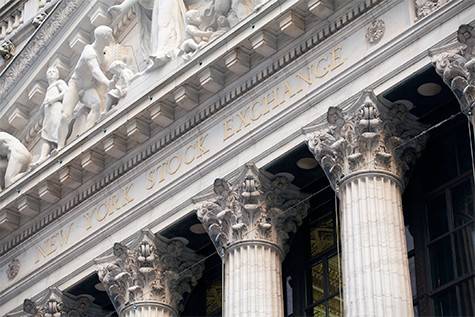
U.S. equities moved higher on Friday after weaker inflation figures strengthened expectations that the Federal Reserve will cut interest rates at its upcoming meeting.
Fresh data showed that the core Personal Consumption Expenditures (PCE) price index — which excludes food and energy — rose 2.8% year over year in September, slightly below expectations of 2.9%. On a monthly basis, the index increased 0.2%, in line with forecasts.
The headline PCE index, which includes more volatile components, climbed to 2.8% year over year from 2.7% in August, while the monthly pace held steady at 0.3%.
According to CME Group’s FedWatch tool, markets are pricing in an almost 89% probability of a 25-basis-point cut at the Fed’s next policy meeting.
In market trading as of 16:15 GMT, the Dow Jones Industrial Average rose 0.4% (183 points) to 48,034. The S&P 500 gained 0.5% (31 points) to 6,888, while the Nasdaq Composite advanced 0.6% (137 points) to 23,642.