


 |
|
Dollar steadies on Fed bets, data

The US dollar traded broadly steady on Tuesday, as positive economic data and shifting expectations for Federal Reserve monetary policy outweighed concerns about the possibility of another US government shutdown.
The US Dollar Index, which measures the currency against a basket of peers, held relatively stable at 97.53 after rising 1.5% over the past two days. The euro rose 0.12% to $1.1804.
The dollar had gained stronger momentum in recent days after the nomination of Kevin Warsh to lead the Federal Reserve, as markets generally expect him to be less inclined toward pushing for rapid rate cuts compared with other potential candidates.
Rate Cut Expectations Remain in Place
Lee Hardman, senior currency analyst at MUFG, said Warsh’s nomination sent a signal that US President Donald Trump is not seeking to undermine the Fed’s independence in setting monetary policy. However, he added that Warsh is still likely to support lower interest rates, at least in the initial phase.
He said, “We believe that once the dust settles, the dollar will return to weakening, and we expect EUR/USD to move back above 1.20 later this year, as the Fed begins cutting rates while the European Central Bank keeps rates unchanged.”
Meanwhile, US manufacturing data showed activity returning to growth, with the ISM reporting on Monday that the manufacturing PMI rose to 52.6 last month, the highest level since August 2022.
However, the closely watched US January jobs report will not be released this week due to the partial federal government shutdown.
Elsewhere, geopolitical tensions eased after the United States reached a trade agreement with India and announced the resumption of nuclear talks with Iran.
Australian Dollar Jumps
The Australian dollar surged after the Reserve Bank of Australia delivered its first interest rate hike in two years, raising the benchmark rate by 25 basis points to 3.85%. The bank also warned about inflation risks, reinforcing bets on at least one additional hike this year.
The Australian dollar rose 0.96% to $0.7014, and climbed more than 1.5% against the Japanese yen to 109.48, its highest level versus the yen since 1990.
Both the European Central Bank and the Bank of England are expected to keep interest rates unchanged at their meetings on Thursday. Markets will closely watch any signals from the ECB on whether the euro’s recent strength could influence future policy direction.
Later this week, attention will turn to Japan’s lower house elections.
Investors have been selling the Japanese yen and government bonds ahead of the February 8 vote, on bets that a strong result for Prime Minister Sanae Takaichi’s party would give it greater room to expand fiscal stimulus.
The yen received some support last week after Japanese policymakers hinted at possible coordination with the United States on joint action to defend the currency.
The dollar was steady against the yen at 155.67, down from a one-and-a-half-year high of 159.45 reached in mid-January.
Matthew Ryan, head of market strategy at Ebury, said, “The outcome of this week’s election will be crucial, as a strong showing by Takaichi could push the yen back toward the 160 level.”
Finance Minister Satsuki Katayama on Tuesday defended Takaichi’s recent remarks highlighting the benefits of a weaker yen, saying the prime minister was referring to “what is written in textbooks.”
Gold climbs over 6% after historic selloff

Gold prices rose by more than 6% in European trading on Tuesday, beginning a rebound from a four-week low, after a sharp three-day selloff driven by a historic wave of liquidation across precious metals. The recovery is also supported by a pause in the US dollar’s advance in the foreign exchange market.
Starting today, traders are closely watching the release of several very important US labor market reports, which are expected to provide strong clues about the Federal Reserve’s interest rate path over the course of this year.
Price Overview
• Gold prices today: Gold rose by 6.2% to $4,949.81, up from the session opening level at $4,660.63, and recorded a session low at $4,660.63.
• At Monday’s settlement, the precious metal gold fell by 4.75%, marking its third consecutive daily loss, and hit a four-week low at $4,402.83 per ounce.
• In addition to accelerated profit-taking from the all-time high at $5,598.13 per ounce, the gold market entered a historic selloff after concerns about Federal Reserve independence eased, and after CME Group raised margin requirements on gold and silver futures.
The US Dollar
The US Dollar Index fell by 0.2% on Tuesday, pulling back from a two-week high at 97.73 points, reflecting a halt in the dollar’s gains against a basket of major and minor currencies.
Beyond profit-taking, the dollar is edging lower as investors refrain from building new long positions while waiting for clearer signals on the future path of US interest rates.
US Interest Rates
• According to the CME FedWatch tool, pricing for keeping US interest rates unchanged at the March meeting stands at 85%, while the probability of a 25-basis-point rate cut is priced at 15%.
• To reprice those expectations, traders are closely monitoring a series of very important US labor market data releases.
• Later today, US job openings data for the end of last November will be released, followed on Wednesday by private-sector payrolls data for January, and on Thursday by weekly jobless claims.
Gold Outlook
Deutsche Bank analysts said that history suggests short-term drivers are usually behind moves of this kind, even if the scale of the recent selloff has raised fresh questions about market positioning.
The bank’s analysts explained that although speculative activity indicators have been elevated for months, they are not sufficient on their own to explain the magnitude of last week’s move.
They added that the correction in precious metals prices exceeded the apparent catalysts, and that it is unlikely investor intentions toward precious metals — whether official, institutional, or retail — have fundamentally turned more negative.
Deutsche Bank noted that the selloff resulted from a mix of factors, including a rebound in the US dollar, shifting expectations about Federal Reserve leadership after President Donald Trump nominated Kevin Warsh to head the Fed, and position trimming ahead of the weekend.
Xavier Wong, market analyst at eToro, said speculative positioning clearly played a short-term role. He added that silver attracted greater retail participation than gold, making it more sensitive to fast shifts in sentiment and short-term trading flows.
SPDR Fund
Gold holdings at SPDR Gold Trust, the world’s largest gold-backed ETF, were unchanged on Monday, keeping the total at 1,087.10 metric tons.
Euro tries to recover ahead of eurozone inflation data
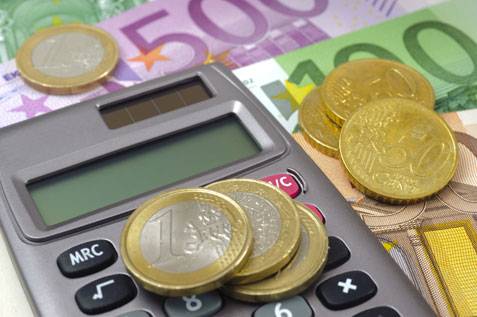
The euro rose in European trading on Tuesday against a basket of global currencies, posting its first gain in three days versus the US dollar, as part of a rebound attempt from a two-week low, supported by a pause in the dollar’s advance in the foreign exchange market ahead of key US labor market data.
Investors are awaiting the release on Wednesday of headline inflation data for the euro area for January, which is expected to provide strong signals about the European Central Bank’s interest rate path this year.
Price Overview
The euro rose 0.2% against the US dollar to $1.1816, from the day’s opening level at $1.1791, and recorded a session low at $1.1785.
The euro closed Monday down 0.5% against the dollar, marking a second straight daily loss, and hit a two-week low at $1.1776 after the release of strong US economic data.
US Dollar
The dollar index fell 0.2% on Tuesday, pulling back from a two-week high at 97.73 points, reflecting a pause in the US currency’s gains against a basket of major and minor currencies.
Beyond profit-taking sales, the dollar weakened as investors refrained from building new long positions ahead of important US labor market data, which will offer clearer guidance on the Federal Reserve’s interest rate path this year.
Later today, US job openings data for the end of November will be released, followed on Wednesday by US private payrolls data, Thursday’s weekly jobless claims, and Friday’s official employment report for December.
European Rates
Money markets are currently pricing the probability of a 25 basis point rate cut by the European Central Bank in February at below 25%.
To reassess those expectations, investors are watching for the euro area headline inflation data for January due on Wednesday.
The first ECB monetary policy meeting of the year begins Wednesday, with decisions due Thursday, and rates are widely expected to remain unchanged for the fifth consecutive meeting.
Aussie shines after RBA rate hike

The Australian dollar rose broadly in Asian trading on Tuesday against a basket of major and minor currencies, resuming its strong gains against the US dollar after a two-day pause and moving back toward a three-year high, after the Reserve Bank of Australia raised interest rates for the first time since November 2023.
The Reserve Bank of Australia said inflation is likely to remain above target for some time, making it appropriate to raise the policy rate. It added that private demand is growing faster than expected, capacity pressures are stronger than previously assessed, and labor market conditions remain relatively tight.
The tightening step was broadly in line with global market expectations and followed data showing inflation reached its highest level in six quarters.
Price Overview
The Australian dollar rose 1.15% against the US dollar to 0.7034, from an opening level of 0.6954, and recorded a session low at 0.6946.
The Australian dollar had closed Monday down 0.2% against the US dollar, marking a second straight daily loss, amid corrective trading and profit-taking after reaching a three-year high at $0.7094.
Reserve Bank of Australia Decision
In line with expectations, the RBA’s monetary policy board decided on Tuesday to raise the benchmark interest rate by 25 basis points to 3.85%, marking the first Australian rate increase since November 2023, after holding rates unchanged at the previous three meetings.
The bank said private demand is expanding faster than expected, capacity constraints are greater than previously estimated, and labor market conditions remain somewhat tight. It noted that inflation pressures increased markedly in the second half of last year.
The RBA added that economic growth is running stronger than expected and inflation is likely to stay above target for a period, justifying the decision to raise the policy rate.
RBA Governor Michele Bullock Comments
RBA Governor Michele Bullock said:
Inflation remains too high.
We cannot allow inflation to move out of control.
There is concern about the persistence of elevated inflation.
A 50 basis point rate hike was not discussed.
The board does not have a preset path for interest rates.
The board will remain cautious on rates.
We aim to lower inflation while preserving labor market strength.
A sustained rise in the Australian dollar would help reduce import prices.
It is unclear whether this will become a full tightening cycle.
Nothing can be ruled out.
The board will closely monitor incoming data.
Quarterly inflation readings need to decline.
Australian Rate Expectations
After the meeting, pricing for a 25 basis point RBA rate hike in March remained below 50%.
Market pricing for a 25 basis point hike in May rose to above 80%.
Investors are awaiting further data on inflation, unemployment, and wages in Australia to reassess the rate outlook.
Analyst Views
Harry Murphy Cruise, Head of Economic Research at Oxford Economics Australia, said that with the RBA now expecting a slower decline in inflation, risks clearly lean toward a series of rate increases rather than a single move, especially given that the latest decision was unanimous.
Abhijit Surya, Asia-Pacific Chief Economist at Capital Economics, said the RBA clearly sees the path to lower inflation as long and difficult. He expects only one more rate hike in May, but noted that since the bank does not expect core inflation to return to the midpoint of the 2%–3% target band until early 2028, it may ultimately need to raise rates higher than currently projected.