


 |
|
Has the market already forgotten the Middle East?
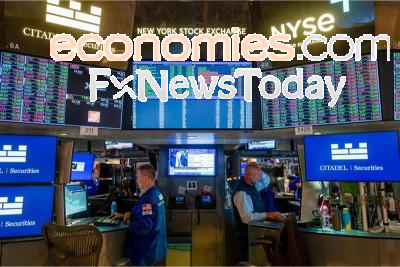
Just days ago, financial markets appeared to be pricing in the possibility of a major regional conflict.
Oil prices surged, investors rushed into gold, the U.S. dollar strengthened as demand for safe-haven assets increased, and concerns mounted that any disruption to shipping through the Strait of Hormuz could trigger another global inflation shock.
Today, much of that fear has already disappeared.
Oil has suffered one of its sharpest daily declines in months, Wall Street remains close to record highs, cryptocurrencies continue to hold near historic levels, Treasury yields have eased, and the dollar has given back part of its recent gains. Judging by today's price action alone, it would be easy to conclude that markets have already moved on from the Middle East.
But have they?
Markets rarely trade on today's headlines
One of the most important lessons in financial markets is that prices are driven less by current events than by expectations about what comes next.
Last week, investors feared that military escalation between the United States and Iran could develop into a prolonged conflict capable of disrupting global energy supplies. As a result, markets rapidly priced in higher oil prices, stronger inflation risks and a more cautious investment environment.
Once those worst-case scenarios became less likely, investors immediately began reversing those positions.
That does not necessarily mean the geopolitical situation has been resolved. Rather, markets have simply adjusted to a lower perceived probability of a severe disruption.
Oil tells the clearest story
No asset better illustrates this shift than crude oil.
The sharp rally that followed the military strikes was built largely on fears that Iranian retaliation could threaten shipping through the Strait of Hormuz, a route that carries roughly one-fifth of global oil consumption.
As those fears eased, traders quickly removed much of the geopolitical premium that had accumulated over the previous week.
The speed of today's decline demonstrates that oil traders now believe a prolonged disruption to global energy supplies has become considerably less likely than markets feared only days ago.
Risk appetite has returned surprisingly quickly
The recovery in broader financial markets has been equally striking.
Instead of remaining defensive, investors have returned to equities, cryptocurrencies and other higher-risk assets. Safe-haven demand has softened, Treasury yields have retreated and the U.S. dollar has weakened as capital rotates back toward growth-oriented investments.
The shift reflects a broader belief that macroeconomic fundamentals once again deserve more attention than geopolitical headlines.
For now, investors appear far more interested in Federal Reserve policy, corporate earnings and economic growth than in military developments that, at least for the moment, seem less likely to escalate further.
That doesn't mean geopolitical risk has disappeared
Markets often move on long before geopolitical uncertainty actually ends.
The ceasefire remains fragile, diplomatic tensions continue and the Strait of Hormuz remains one of the world's most strategically important energy chokepoints. Any renewed military escalation or threat to global oil supplies could quickly force investors to rebuild the geopolitical premium they removed today.
History has repeatedly shown that geopolitical risk tends to disappear gradually—until a single unexpected headline brings it back all at once.
The market's attention has simply shifted
Rather than forgetting the Middle East, investors have reassessed its importance relative to everything else happening this week.
With a Federal Reserve meeting, several major U.S. technology earnings reports and a busy calendar of economic data all approaching, markets now see monetary policy and corporate fundamentals as the more immediate drivers of asset prices.
Whether that proves to be the correct assessment will depend largely on developments over the coming days. If geopolitical tensions remain contained, today's market reaction may prove justified. But if the conflict intensifies again, investors may discover that the Middle East was never truly forgotten—it was simply overshadowed by a new set of risks competing for the market's attention.
Wall Street trades mixed as investors turn cautious ahead of a pivotal week for markets
U.S. stocks traded with mixed performance on Monday as investors adopted a more cautious stance ahead of one of the busiest weeks of the earnings season and the Federal Reserve's latest policy meeting.
MoreBitcoin steadies while altcoins diverge as investors await the next market catalyst
Cryptocurrencies traded in mixed fashion on Monday evening as investors took a breather following a strong run over recent weeks, with Bitcoin holding firm near record territory while several major altcoins posted more pronounced moves.
MoreOil tumbles as easing U.S.-Iran tensions erase much of last week's geopolitical risk premium

Oil prices remained under heavy pressure on Monday afternoon as traders continued to unwind the geopolitical premium built into crude prices during last week's escalation between the United States and Iran.
More